The Sand Cat
By Henry Kaplow
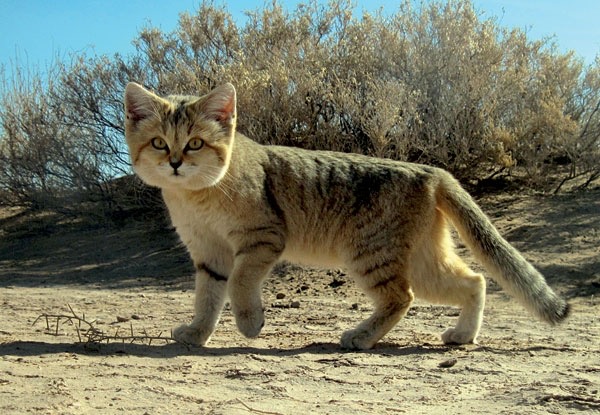
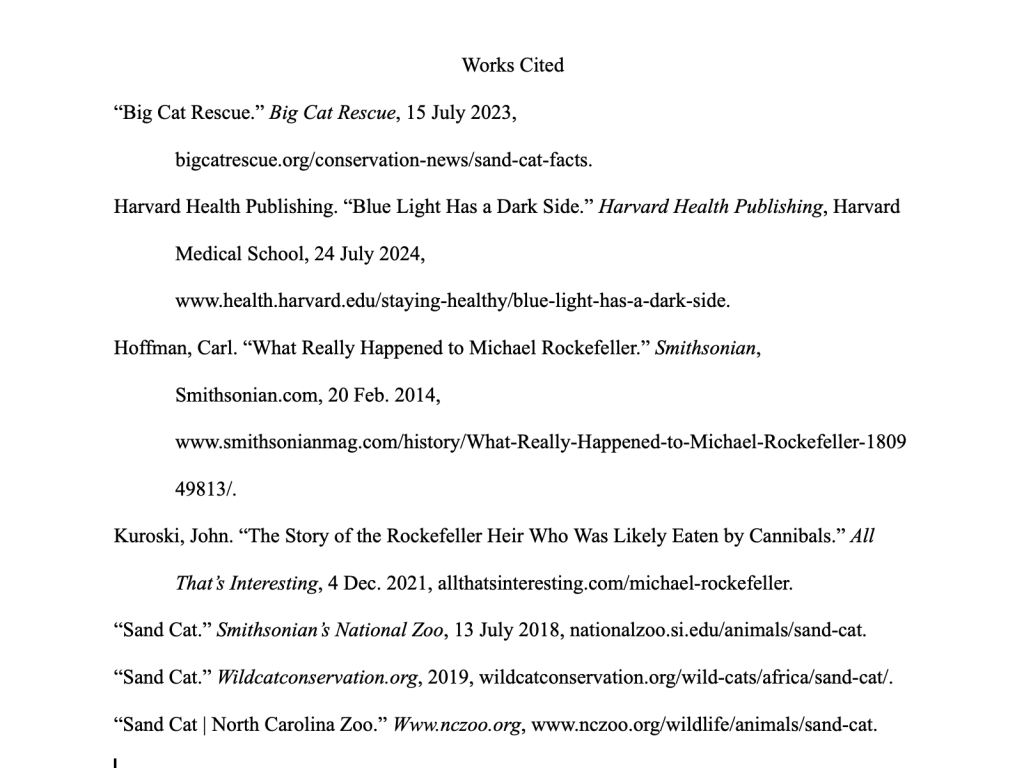
The Felidae (cat) family is one of the most diverse in the animal kingdom. They cover every continent except Antarctica and have adapted to almost every terrestrial environment. No animal shows this incredible adaptation better than the sand cat. The sand cat is perfectly suited to dry desert-like conditions and are the only cats who live in true deserts like the Sahara. Like most desert creatures, it can go weeks without drinking water and gets most of its moisture from its prey. Sand cats eat small rodents, hares, and even venomous snakes. The sand cat’s many other adaptations include large ears, small size, and thick fur. They use their large ears to hear creatures burrowing in the sand. Once they locate their prey, a sand cat’s small size (2-4 lbs) and camouflage allow them to move undetected across the desert sands, and their furry paws allow them to move silently through the dunes without sinking. As soon as the sand cat gets close enough to their quarry, they will begin to use their claws to dig deep underground. One lightning fast bite and this feline has a meal. All of these adaptations make sand cats some of the most efficient predators in the animal kingdom. They boast a 60-70 percent hunting success rate, much higher than lions and cheetahs who sit around 25 percent. The sand cat is a perfect example of how adaptation can help animals to survive, even in the toughest environments.
Nietzsche Book Review
By Adrian Anatolian
Also sprach Zarathustra, also known as Thus spoke Zarathustra, is philosophical fiction written by the great German philosopher and writer, Freidrich Nietzsche. The book begins where the protagonist, Zarathustra otherwise known as Zoroaster in the west, descends from a cave in the mountains after ten years of silent living and meditation. He is full of love and wisdom and is excited to share all his knowledge and ideas he learned while in solitude. He arrives at a town where he preaches of the “superman” and the “Übermensch”, or “overman”. He believes these species to be the purpose of Earth. He describes mankind as a link between man itself and the overman. However, the people he preaches to do not appreciate what he has to say, and they make a huge mockery of him. After the mockery, the story leads up to a tightrope walker who falls to his death once an embodiment of evil pushes him off the rope. This represents something deeper though. It represents the absurd idea of attempting to transcend mortality by risking failure and death to achieve greatness. The tightrope walker decides to go on his own journey to achieve what he thinks is great in his life, to transcend societal norms, all by risking his life. Zarathustra unfortunately cannot move the “herd” and declines from society carrying the dead tightrope walker with him. He leaves the town and goes to the grave yard where he is made fun of more. The people don’t want to understand him. The people committing the mockery of Zarathustra represent the “Last Man,” or the modern, nihilistic society which does not seek to explore its own meaning, but which desires pleasure, comfort, security, and mediocrity, like modern day society. However, the book does have a happy ending for the transcending Zarathustra. He leaves his cave transformed and happy. He overcomes his pity for the Last Man and declares “Arise now, arise, thou great noontime!” (Nietzsche p. 336). It symbolizes a moment of transformation and overcoming pity for Zarathustra, he is free himself. He is now wise and begins the dawn of a new era, an era Beyond Good and Evil (also a book by Nietzsche which acts as an informal sequel to the philosophical backstory of Thus spoke Zarathustra).
How to Actually Get Quality Sleep
By Lily Doan
If your sleep schedule is all over the place this quarter, here’s a simple guide to get to sleep fast, stay asleep, and wake up refreshed.
Step 1: Find a schedule
Let me put you on the 90 minute sleep schedule real quick. Anyone who knows me knows I shout this blessing of knowledge upon the earth from the rooftops. Your body goes through 4 stages of sleep; REM (rapid eye movement), Light (or non-rem 1), Core (or non-rem 2), and Deep. Each cycle of all of the stages takes 90 minutes and if you time your wake up and bedtime correctly, your alarm will go off when you’re in the lightest stage of your sleep, making it easier to get up out of bed without snoozing. A great program for this is the sleep foundation sleep calculator. https://www.sleepfoundation.org/sleep-calculator
Step 2: Stick to the schedule
I know that this is the point where I’m going to lose a lot of AP students currently crying over their AMSCO, but trust me when I say it is within the realm of possibility for you to go to bed at the same time every night. If something isn’t finished by the time you sleep, it just isn’t going to get done before you sleep, and that’s okay. I honestly don’t care if your bedtime of choice is 1am, if that works for you and you are able to stick to that every evening (morning?) The sleepy time clock, otherwise known as the circadian rhythm, in your brain runs off a chemical called melatonin. Once your body gets into a routine (typically 1-2 weeks), it will release this natural tranquilizer around the same time every night, making it easier to fall asleep.
Step 3: It really was the phone
Please I beg of you, put your phone away from your bed, not within arms reach, not within legs reach, social distance from your phone at bedtime and your eyeballs will thank you. Brownie points for you if you put in a different room and get a physical alarm clock for goodness sake.
Step 4: Turn it down for sleep
Dim your lights and turn off screens an hour before bedtime. Turn the big light off, you know you want to. Switch to a lamp (that is not a cool tone!). Believe it or not, your sleep is quite sensitive to what goes through your eyes. In a Harvard health study, “blue light suppressed melatonin for about twice as long as the green light and shifted circadian rhythms by twice as much (3 hours vs. 1.5 hours)” (“Blue Light”). If you really need that doomscroll hit before bed, please, at least turn your phone to grayscale (settings->accessibility->color filters -> grayscale).
It can be difficult to start all of these steps at once so implement them one at a time if you choose to do so. Start with one and build up slowly until you wake up everyday to listen to eight hours of Heimler before your test.
PLEASE GO TO SLEEP, IT’S NOT A JOKE
An Addendum by Adrian Anatolian
I’ve often heard people in the hallways or classmates talking about getting 5–6 hours of sleep as if it is some sort of competition. I’m telling you now that getting less sleep is not a competition. According to the NIH, sleep is as important as eating food or drinking water. When you talk about getting only 5 hours of sleep, you are essentially saying “I ate a bag of chips and had a small paper cup of water today.” Has anyone told you that they worked so hard that they forgot to drink water or eat food in the past 2 days? Would you applaud their work ethic? Your answer is likely no. Sleep is possibly the most important thing in your life for longevity and daily survival. A lack of deep sleep has a direct link to Alzheimer’s disease, which, in case you don’t know what Alzheimer’s is, is literally when your brain cannot produce enough proteins (which are produced when you are in deep sleep) to retain memories. Sometimes, in severe cases, you can forget how to chew, how to walk, and even how to BREATHE. People often perceive sleep as just the time when your brain rests and relaxes, but in reality, sleep is more like a symphony; it has rhythms and movements. There are parts of your brain that run on a 24-hour cycle, which is used to regulate body temperature, hunger, hormones, and tiredness. Your sleep runs on the circadian rhythm, the clock which your sleep schedule follows. Your body needs sleep, especially at this age. In 2015, 72 percent of high schoolers recorded that they were not getting enough sleep; that was before the rise of Instagram Reels and TikTok. I can imagine what that number is now. Poor sleep is linked to obesity, poor mental health, and low academic performance. Maybe the reason why you are so depressed and tired in class is because you are not sleeping enough. Now, you might be asking, what can I do to not feel tired and depressed? Sleep, please sleep. You are killing your body without sleeping. It really is super important. Sleep is not a joke; it’s not a leisure activity; it is vital for your survival and longevity in the future. Build good habits now that carry on to the future.
Michael Rockefeller to North Sentinel Island
By Will Stern
In 1961, Michael Rockefeller, the great-grandson of John D. Rockefeller, embarked on a research trip where his boat capsized off the coast of New Guinea (Kuroski). Three years later, after an extensive search effort and widespread media attention, he was officially declared dead by drowning. However, later investigations point to a far more horrifying possibility: he reached shore but was killed and possibly eaten by the members of the Asmat tribe (Hoffman).
Born in 1938, Michael Rockefeller was heir to the Rockefeller fortune. However, rather than pursuing a conventional life in finance like much of his family, he became fascinated by tribal art and chose a path of exploration and anthropology.
After graduating from Harvard in 1960, Michael took a position on the board of his father’s museum with the hope of bringing a major collection of Indigenous artwork to New York (Kuroski). His ambition led him to take a voyage to Dutch New Guinea, a remote island off the coast of Australia colonized by the Dutch. The island was home to the Asmat people, and despite the Dutch’s presence in the region for eight years, many Asmat people had never laid eyes on a foreigner (Hoffman).
Michael’s first voyage to the island went well. The Asmat people hailed the researchers as supernatural beings and allowed for photographs; however, they refused to sell local and cultural artifacts (Kuroski). On this first voyage, Michael learned of the constant intertribal warfare as well as their ritual practices, including taking the heads of their enemies and nailing them to posts (headhunting) and eating their flesh (cannibalism), foreshadowing Rockefeller’s eventual fate (Kuroski).
After returning home from his first voyage to New Guinea, Michael was amazed by the Asmat people’s culture, writing in a diary, “Now this is wild and somehow more remote country than what I have ever seen before” (Kuroski). He soon planned a second research trip to New Guinea, unaware of the danger (Hoffman).
One year later, in 1961, accompanied by Dutch anthropologist René Wassing, Michael Rockefeller set out on his second and final voyage to New Guinea (Kuroski). As his ship approached the southern coast of the island, it capsized. Michael Rockefeller swam toward land. He was never seen again.
Theatre
By Zach Patten
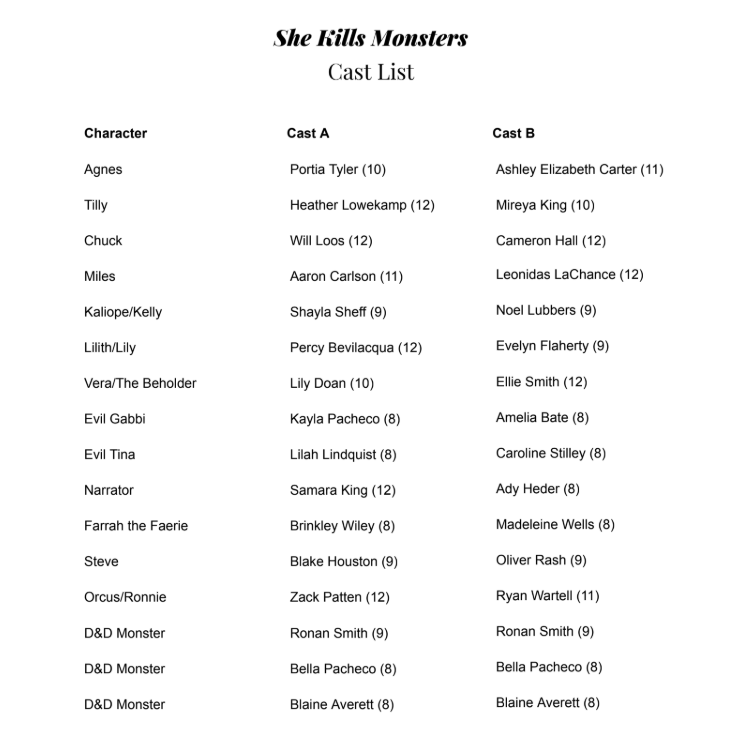
After weeks of rehearsals, HRA’s Theatre department is finally about to put on their production of “She Kills Monsters” by Qui Nguyen. As Mrs. Goddin stated in an email the play is a “fast-paced, funny, and surprisingly heartfelt play that blends high school life with the world of Dungeons & Dragons.”
This show will be performed with two separate casts performing a total of four performances. Cast A will perform on Thursday and Saturday at 7:00 pm, and Cast B will perform on Friday at 7:00 pm and Sunday at 2:00 pm. See the cast list below to make sure you can go see your friends on a night they have a major role, although almost everyone will be on stage for all four performances, regardless of their cast. Remember, all upper school students can attend any night for free!
Looking for Classics?
By Cam Hall
In the social media age where new content is being released constantly and very little manages to stick in the cultural consciousness for more than a few moments, it can be very gratifying to experience a true classic. The pieces of art from bygone eras that stick in our cultural memory because they continue to mean a lot to us. For those of you looking for something new by going to something old, I have chosen a classic album and a classic movie that I imagine some of you know of, but very few of you will be familiar with.
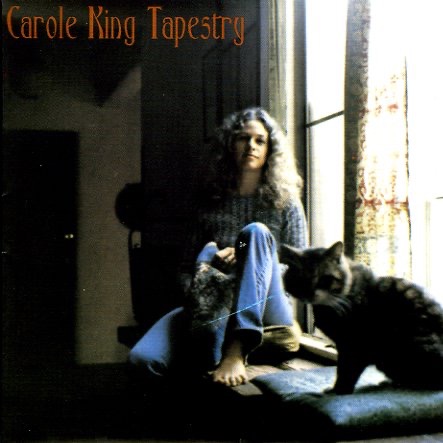
Tapestry by Carole King
Tapestry is Carole King’s most well known album and one of my personal favorites of all time. Those even vaguely familiar with King will not be surprised the songwriting is outstanding with each song’s lyrics feeling deeply personal while still allowing for analysis and interpretation. King’s soft rock ballads will keep you listening as you slowly begin to allow yourself to relax and immerse yourself in the music. The album’s flow is also of note. With so many albums, even great ones, feeling like either arbitrary compilations of songs or overly complicated concept albums, it is refreshing to hear an album where each song feels like it flows naturally into the next. Music is, for my money, the medium whose beauty is hardest to capture with words so I’ll stop here, but needless to say this album’s charm has not left it with age.
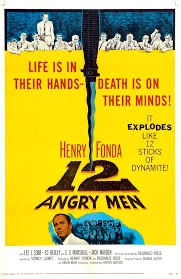
12 Angry Men is one of the most universally acclaimed films of all time. On IMDB it is the 5th highest rated movie of all time and on Letterboxd it is 3rd of all time. All that being said, I can almost guarantee you’ve never watched it. That’s okay I hadn’t either until very recently. The film has a very simple premise: 12 jurors are locked in a room and must unanimously decide whether there is sufficient evidence to rule an accused murderer guilty and have him put to death. The script is extremely clever and I can say with absolute certainty I have never seen a better acted movie. The camera work also does an excellent job putting the audience in the scene. That being said, if you are the type of a person who zones out or goes on their phone during a movie, you will not have a very good time with this film. It doesn’t rely on spectacle, but if you’re an engaged watcher you will be amazed.
 HRA Newspaper